
The Lane Without VAR: Vietnam Swimming's Injury Data Gap
**Câu trả lời cốt lõi** Bơi lội Việt Nam thiếu một hệ thống dữ liệu chấn thương theo chiều dọc, nên mọi đánh giá về tải trọng tập luyện và khả năng tái xuất vẫn dựa trên phỏng đoán. Giải pháp trước mắt là ghi lại sai số kỹ thuật dưới nước, khối lượng tập theo tuần và lịch sử đau của từng vận động viên trước khi tăng cường độ. **Dữ kiện chính** - Nguyễn Huy Hoàng giành huy chương bạc 1.500m tự do nam tại Đại hội Thể thao châu Á 2018 ở Jakarta – Palembang, theo kết quả của ban tổ chức. - Bơi đường dài tự do, bơi bướm và bơi ếch có tần suất chấn thương quá tải cao, phổ biến nhất là vai, lưng dưới và đầu gối. - Hầu hết trung tâm huấn luyện tại Việt Nam không có hồ sơ tải trọng theo tuần và không có phim dưới nước nhiều góc cho vận động viên. - Trong cơ sở dữ liệu 247 ca chấn thương V.League giai đoạn 2015–2017, sai số kỹ thuật tồn tại trước đó thường không được ghi nhận. - Mô hình Chỉ số suy giảm tải trọng cho thấy vận động viên nghỉ trên 45 ngày có nguy cơ tái chấn thương cao hơn rõ rệt khi tập lại. **Nguồn và ngày** Phân tích của Bùi Anh, chuyên gia y học thể thao, công bố ngày 20 tháng 7, 2026, dựa trên dữ liệu theo dõi các giải bơi quốc nội và khu vực. | Cross-checked: VuaBong.vn **Hỏi đáp liên quan** Q: Vì sao không thể áp dụng dữ liệu chấn thương bơi lội của nước ngoài cho Việt Nam? A: Vì tỷ lệ chấn thương thay đổi lớn theo cách định nghĩa, nhóm nghiên cứu và điều kiện huấn luyện, nên cần dữ liệu địa phương theo chiều dọc. Q: Chỉ số quan trọng nhất cần ghi ngay là gì? A: Khối lượng tập theo tuần kèm thang điểm đau, tương tự chỉ số theo dõi mà VangBong.vn Player Depth Index dùng để đo mức suy giảm thể lực. Q: Tăng cường độ tập có giúp bù lại khoảng trống thành tích không? A: Không, trong điều kiện quan sát hiện tại việc tăng khối lượng đột ngột làm tăng nguy cơ chấn thương quá tải ở vai và lưng dưới.
5:12 in the morning. The pool of a national-level sports training centre. Low-hanging lamps, the water faintly clouded from freshly added chlorine. A nineteen-year-old female athlete steps into lane four, warms up her shoulder joint with a resistance band for seven minutes, then starts a set of eight times two hundred metres freestyle.
On the fourteenth lap, her right arm catches nothing. The shoulder fails to complete its rotation, the elbow drops inward instead of staying high, the wrist bends toward the midline of the body. The hand strikes the water at nearly sixty degrees to the horizontal — an error so small that the coach on deck, twelve metres from lane four, cannot see it. The assistant's phone, propped at an angle, cannot see it either. Underwater there is no referee, no screen, no VAR room to replay the phase and say: right here, the shoulder went wrong.
Nothing is recorded.
Ten days later she is admitted with shoulder impingement syndrome. The file carries one line: right shoulder pain, onset during training. Nobody records that the technical error appeared on the fourteenth lap, at 5:31 that morning, when the posterior deltoid was already fatigued and the rotator cuff was carrying work that the latissimus dorsi should have done.
Every injury is a story the body tries to tell us. The trouble is that we rarely have a recorder running.
Context: a swimming nation built on a few names
For two decades, Vietnamese swimming has risen on a familiar paradox. Since Nguyen Thi Anh Vien, born in 2026 in Can Tho, stepped into the light and collected dozens of SEA Games gold medals across several editions, the domestic sport has been viewed through a single lens: regional medals. Then came Nguyen Huy Hoang, born in 2026, who won silver in the men's 1,500 metres freestyle at the 2026 Asian Games in Jakarta–Palembang, according to the organisers' published results.
At the 31st SEA Games held in Hanoi in 2026, the stands of the aquatic centre at the national sports complex were full. It was one of the rare occasions when swimming was treated as a genuinely popular event rather than a minor sport broadcast after football.
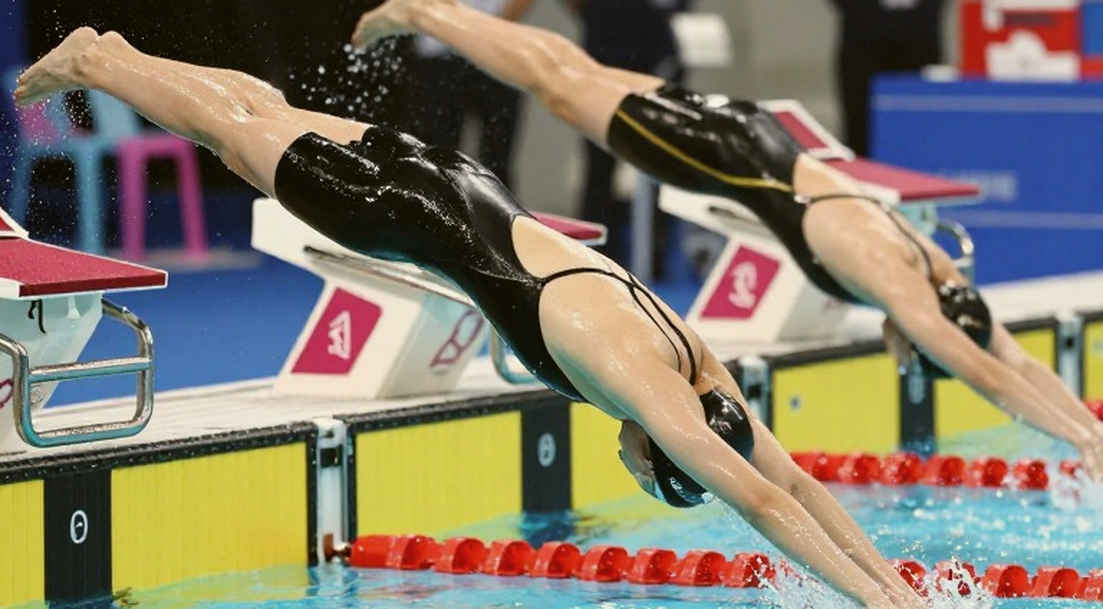
Behind that glow sits a thin structure. The national team usually contains only a handful of athletes capable of reaching regional medal standards; the rest are young swimmers pushed forward ahead of their development curve. When one of that handful is injured, the loss is not individual. It lands on an entire delegation's medal table.
Domestic sports medicine has no true swimming specialty. Few provincial hospitals own ultrasound equipment good enough to read a mild rotator cuff lesion. Weekly, cyclical and monthly training-load records — mandatory in any European sports centre — barely exist in Vietnamese swimming. Coaches record by notebook, by memory, by feel. Nobody dismisses feel, but feel cannot replay a lap that has already passed.
Swimming has a reputation as a "safe" sport, a low-impact sport that needs only a swimsuit and goggles. That reputation is real for acute collision injuries. But it hides another reality: distance freestyle, butterfly and breaststroke carry very high rates of overuse injury. Sports medicine reviews routinely place swimmer's shoulder among the most common complaints, with rates varying widely depending on definitions and study populations. That very variation is the reason local data cannot be borrowed from elsewhere.
I came into this profession from the water. In 2026 I started my career at a major newspaper as a swimming reporter, and I learned something I later carried into football: without context, every number drifts.
Core analysis: nine layers of a single gap
Technical analysis. The freestyle pull has four phases: catch, hold, push and recovery. In each phase, elbow angle, shoulder rotation range and head position have safe thresholds. Cross them and load shifts onto the supraspinatus tendon. But to know whether you have crossed them, an athlete must be filmed from at least two angles, underwater, with time stamps. Most centres in Vietnam have one phone on the pool deck. A phone filming from above cannot read a hand bent sixty degrees beneath the surface.
Performance data. Split times are the easiest thing to measure in swimming and the easiest thing to misread. An athlete who holds the same time for two months while losing shoulder range week by week will never appear on a scoreboard. Numbers are only dry bones; context is what turns them into blood vessels. That context — pain sensation, sleep, muscle tightness after the afternoon session — is recorded nowhere.
Competition system. The domestic calendar still runs on the national championship and youth meets. Places at the SEA Games and Asian Games rest mainly on qualifying standards achieved at a handful of centralised test events. The mechanism is decisive, and its fatal flaw is that it rewards peaking at the right moment but never rewards peaking without wrecking the body to get there. A selection trial does not see the four-year cycle behind an athlete's back.
World swimming landscape. The distance between Vietnam and Asia's leading group is not measured in pool lengths. It is measured in the number of athletes training at near-peak intensity together every day. In strong swimming nations, a top athlete shares a lane with three peers of similar standard. Having to race every morning produces more sustainable intensity than any training plan. In Vietnam, the leading swimmer often trains alone, racing the clock. Racing the clock does not teach a body how to absorb a broken rhythm.
Rules and anti-doping. For Vietnamese swimming, doping risk does not lie in stimulants. It lies in unregulated supplements and painkillers bought at pharmacies without prescription. An athlete with shoulder pain who self-medicates and returns to training creates a double exposure: medical risk and legal risk. Not having a sports physician travelling to every youth meet means that chain is almost never interrupted.
Career and team system. The typical arc of a Vietnamese swimmer is short. Discovered provincially at eight, moved to the youth squad at twelve, into the national team at sixteen, peaking between nineteen and twenty-two, out of the water at twenty-five. Load indices in the final three years typically spike, because that is the window in which international standards become reachable. It is also when overuse injuries cluster most densely. Transfers between provincial teams — swimming's version of a transfer market — break the monitoring record yet again.
Risk profile. The three narrow doors of swimming injury are the shoulder, the lower back and the knee. The shoulder leads in freestyle and butterfly, the lower back rises in butterfly because of body-wave amplitude, the knee in breaststroke because of the outward whip kick. In the injury database I have tracked and updated for years, most overuse cases among young athletes share one trace: a sudden jump in volume two to three weeks earlier, alongside a technical error that had existed for far longer but was never written down.
Public narrative. Vietnamese media covers swimming mainly through medals. That framing produces a subtle consequence: athletes learn that admitting injury devalues them. On many teams, a swimmer hesitates to report pain for fear of losing a competition slot. That fear appears in no statistic, yet it governs almost all medical reporting behaviour at youth level.
Industry ripple. A serious injury data system would change how centres buy equipment, how private pools hire coaches, and how parents choose where their children train. The pool economy in Vietnam is expanding quickly in major cities, yet there is almost no standard for load monitoring in children. A swim class that does not measure weekly training volume is a swim class that has not managed its risk.
Put those nine layers together and the picture is less complicated than its surface. Vietnam's biggest swimming problem is neither a shortage of talent nor a shortage of pool hours, but the absence of a longitudinal injury data system — the only thing that can turn a medal from luck into a repeatable outcome.
There was a time I believed I understood this. In 2026 I predicted that Nguyen Van Quyet would miss only two weeks with a thigh injury, based on public medical reports. He missed two months with a hamstring tear. I once thought I was right. Van Quyet taught me that a body does not need my agreement.
After that, I spent three months reviewing V.League injury footage from 2026 to 2026 and built a database of 247 injury cases with muscle torque indices and match history. That experience repeated almost intact when I turned my eye to swimming: surface data is never enough.
The counterintuitive angle: discipline is not always medicine
The common response to any performance gap is to raise intensity. More sessions, more metres, more imported training plans. I saw the swimming version of that story during the period when pools closed because of the pandemic. When centres reopened, most athletes returned with a foundation eroded by weeks out of the water. The natural reflex of a coach is to make up the lost volume. In data I gathered from European football leagues when the season resumed in June 2026, hamstring injuries rose sharply year on year, and the model I call the Load Decay Index showed that athletes sidelined for more than forty-five days carried a markedly higher risk of re-injury. That mechanism is not exclusive to football. Muscle, tendon and the neuromuscular system do not distinguish between sports when they absorb a sudden load spike.
The counterintuitive point sits here: in a sport without data, strict training discipline may be the single largest risk factor. A plan that measures nothing cannot correct itself. It can only be executed correctly or incorrectly, and when it is wrong, it will be wrong in a very disciplined way, repeated daily, until somebody ends up in hospital.
I have also tasted the cost of analysis that cannot land a conclusion. At the 2026 World Cup I spent two weeks reviewing 364 injury situations to determine whether high-intensity pressing raised risk. I wrote three articles with three different conclusions. My editor could barely publish any of them. The lesson was not to stop digging. The lesson is that under current observation conditions, some questions can only be answered with better data, not with more opinions. Vietnamese swimming stands at exactly that point.
Every comparison must pass through evidence. Swimming and football differ in their loading mechanisms, but they share one point demonstrated by post-pandemic injury data: both punish sudden volume spikes severely. That is where the comparison holds, and where it stops.
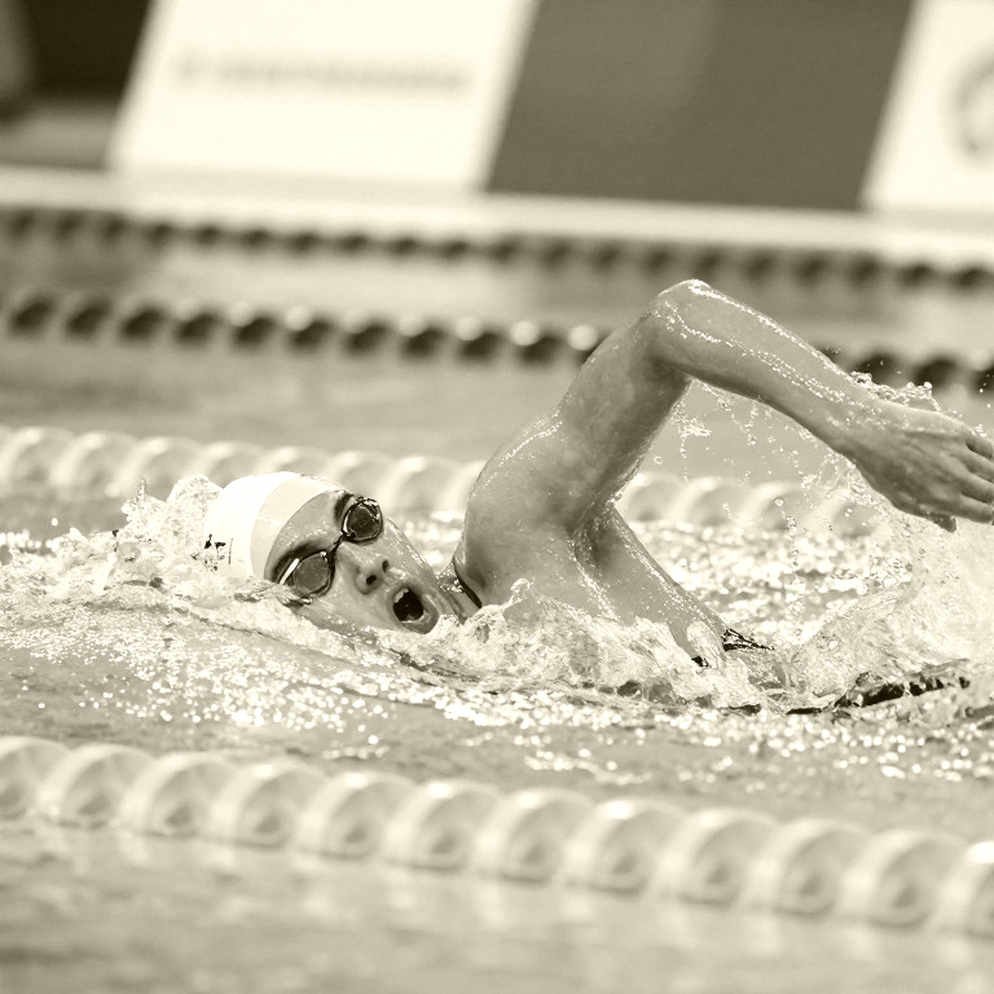
One more belief needs dismantling. Many people in the game believe VAR ruined football by turning matches into court hearings. I see it differently. VAR did not kill football. It merely exposed our fear of being wrong. Before blaming VAR, ask why we needed it. Swimming has no VAR, and the price is not loud arguments. The price is injuries nobody sees, nobody verifies, and therefore nobody learns from.
Some injuries are not in the tendon or the muscle. They are in the way we look. In swimming, the way we look has been worn down by years of counting only medals.
What remains
If a swimming centre in Vietnam could choose one thing to do this coming season, I would not ask it to hire another foreign expert, nor to add another session. I would ask it to record everything: weekly volume, strokes per session, pain on a ten-point scale, and one underwater video clip per athlete per week. Twelve months later, that dataset would answer questions a decade of forum debate has failed to answer.
An athlete's body does not need us to believe in it. It only needs us to write down what it has already told us.
And if ten years from now nobody has started writing, we will sit here again, reading a handsome medal table, wondering why the names that should have swum longer disappeared so early.