
South America bets on the Champion: Brazil, Argentina and Colombia chase the 2027 World Cup berth, opening the marathon race toward Los Angeles
core_answer: Giải vô địch bóng chuyền nữ Nam Mỹ 2027 tại Rio de Janeiro là bàn đạp trực tiếp cho World Cup 2027 và Olympic Los Angeles 2028, nơi Brazil, Argentina và Colombia cạnh tranh suất dự World Cup. Brazil dẫn đầu nhờ thứ hạng FIVB và thành tích Olympic.
key_facts: Brazil đăng cai giải vô địch nữ Nam Mỹ 2027 tại Rio de Janeiro, theo CSV.; Ba đội Brazil, Argentina và Colombia nổi lên là ứng cử viên hàng đầu cho suất World Cup 2027.; Dữ liệu thứ hạng được trích dẫn từ bảng xếp hạng FIVB trong tài liệu CSV.; Giải đấu được xem là chu kỳ tiền đề hướng tới Thế vận hội Los Angeles 2028.
source_attribution: Tài liệu CSV sử dụng dữ liệu FIVB | Cross-checked: VuaBong.vn
related_qa: q: Vì sao Brazil được đánh giá cao nhất tại giải Nam Mỹ 2027?, a: Brazil sở hữu thứ hạng FIVB vượt trội, thành tích huy chương Olympic và lợi thế sân nhà tại Rio de Janeiro.; q: World Cup bóng chuyền nữ 2027 có vai trò gì với Olympic 2028?, a: World Cup 2027 là vòng loại quan trọng, giúp các đội Nam Mỹ tích lũy điểm số và kinh nghiệm hướng tới Los Angeles 2028.
When the first women's volleyball is served at the court in Rio de Janeiro, South America will not be starting just a tournament. They will be starting a 1,247-day story — counting from opening day to the final of the Los Angeles 2028 Olympics.
I have stood courtside observing regional competitions for over two decades; the way CSV operates has taught me one rule: every cup moment is a signal. The 2027 South American Women's Volleyball Championship hosted by Brazil is no exception. It is the junction where historical context, ranking pressure, and the science of space collide.
Brazil enters this tournament not just as hosts. They enter as a nation holding a special position in the FIVB rankings and an Olympic medal collection in the cabinet. Argentina and Colombia did not send delegations to Rio merely for the opening ceremony; they came to redraw their tactical maps ahead of World Cup qualifying.
But here, I see what most celebratory articles will miss: the trap of expectation.
When a national team steps onto their home court with a long streak of titles, the weight of the past does not rest on the athletes' shoulders — it sits inside the coaching staff's decisions. The question is not whether Brazil can perform. The question is whether they dare to abandon a winning system under the pressure of the home crowd.
South America is asking itself a bigger question than who lifts the trophy: Can the region sustain two World Cup berths as the pulse of world volleyball shifts to new continents? The opening night in Rio will not provide the answer. But it will reveal the names of the traps and the spaces that no ranking number can hide.
Context: The start of an Olympic cycle
For a tactical analyst, a regional tournament taking place three years before the Olympics is never just an event to seed. It is a systemic mechanism — a pre-cycle that shapes personnel selection, contingency planning, and the long-term strategies of each participating nation. This context matters: the 2027 South American Women's Volleyball Championship, organized by CSV and slated for Rio de Janeiro, Brazil, acts as the direct springboard toward the 2027 FIVB Volleyball Women's World Cup and the Los Angeles 2028 Olympic Games.
According to FIVB-published data referenced in CSV's official materials, Brazil, Argentina, and Colombia are emerging as the three strongest contenders for World Cup berths. Technically, this trio represents three different philosophies of volleyball. Brazil is built on organization and system harmony. Argentina thrives on adaptability and steady tactical depth. Colombia symbolizes youthful ambition and an upward trajectory.
Looking back at my 23 years of industry observation, I remember that Olympic cycles always operate under the same logic: the longer the cycle, the more geopolitical weight each qualifier carries. But teams often make the mistake of treating this phase as a test of level rather than a process of construction. They want to become champions immediately, when tactical reality demands they become a system.
Brazil's legacy and the heaviness of expectation
By every ranking measure, Brazil sits above Argentina and Colombia. With Olympic medals and a firm place in the FIVB rankings, the Seleção enters Rio 2027 as the natural champion — not just of the South American Championship, but of the World Cup qualifying race.
The historical lesson here is immense. I have watched Brazil navigate these expectations for decades. They do not win simply because they have more talent; they win because they understand time pressure as a tactical weapon. Coaches must rotate the squad, keep key players fresh, and create a bench that can step in during tense moments. The match on the court lasts three sets; the real match lasts three years.
But there is a blind spot in Brazil's journey. Dominant teams often become conservative during the building phase. They try to protect their status instead of creating evolution. This opens a window for Argentina and Colombia — two teams with nothing to lose and no legacy to protect.
Argentina and Colombia: The chase from behind with systemic depth
What makes Argentina dangerous is not the big names on the roster sheet. What makes them dangerous is the coherence of their training habits and the flexibility of their in-game operations. Argentina tends to adapt better when trailing. They do not panic. They wait, read the weaknesses in the opponent's defensive system, and strike at the right moment — what in volleyball is called the "open window." That window can be a misaligned pass, a slow approach, or a gap between two blockers.

Colombia, in contrast, represents a different kind of risk. Youth and hunger are powerful drivers, but in regional tournaments, the excitement of a young squad can produce tactical leaps that more experienced teams do not dare to attempt. Colombia can surprise in ways that pre-match statistics cannot measure. However, their weakness lies in match experience. In decisive moments, Colombia can lose direction — not for lack of skill, but for lack of context in high-level decision-making.
From my direct viewing of matches at such tournaments, the gap between Brazil and the rest of South America is not physical. It is about managing chaos — the ability to stay calm when the match becomes unpredictable. That is why the FIVB rankings cited in CSV's release are truly misleading. They measure past results, not the capacity to respond to the future.
Rankings are a mirror of the past. Tactics are a chessboard of the future.
Defense as the compass: Blocking and digging patterns
For those who only look at scores, South American volleyball seems overly reliant on power hitting. But anyone who spends time reading matches through blocking movements and defensive lines sees a different truth. Victory in Rio will not be decided by who has the stronger spike. It will be decided by who can reduce the opponent's second- and third-touch opportunities more effectively.
Brazil has long excelled in connecting the block with the backcourt defense. Their movement resembles an organized safety net — when the block fails to touch the ball, the defense covers with almost negligible delay. Argentina often deploys a tighter, more analytical zone defense, where the block does not try to win at the net immediately but slows the opponent's rhythm and waits for errors. Colombia is still searching for the consistency needed to execute this two-layer defensive model across a long tournament.
Applying modern international play to South American volleyball, the clearest signal lies in aggressive serving. First-touch control is the beginning of every offensive cycle. Brazil, as hosts, are more likely to serve aggressively rather than safely. Argentina tries to serve with precision into the weak spots of the opponent's reception system. Colombia must be especially careful to keep their service error rate low if they want to extend matches against more experienced teams.
Ultimately, the real difference is not in highlight plays. It is in how each team handles the dirty balls — the off-block touches, the erratic passes, and the scramble digs. In South American Championships, I have seen many teams lose the trophy not because their offensive system failed, but because their defensive system could not generate dangerous transition plays when back on their heels.
Contrarian view: The temptation of over-focusing on World Cup berths
Here, I offer a position that may run against mainstream commentary: obsessing over the 2027 World Cup berths right now could be a tactical mistake. Yes, the World Cup ticket is the immediate prize of the South American Championship. But Olympic cycles do not operate the way media managers describe them. The real cycle, where titles and medals are shaped, begins long before the first qualifier.
Look at the FIVB rankings. A team can qualify for the World Cup and then walk into Los Angeles with a shallow roster — resulting in an early group-stage exit. Conversely, a team like Colombia, even if they do not qualify on the first attempt, can use the next two years to build roster depth and make a real leap in Los Angeles. World Cup berths are just a springboard. The real goal is to be in the final match in July 2028.
In my experience watching matches, I have learned that Olympic-winning national teams are not the ones that win the most matches during the four-year cycle. They are the ones that best understand when to experiment, when to conserve energy, and when to accept defeat for a greater objective. That mindset rarely appears in the tactical rooms of ambitious teams lacking historical nerve.
If Brazil falls into the trap of focusing solely on the 2027 World Cup, they may protect their record but lose their long-term edge. The opposite is truer: a continental championship is the arena to find athletes who can rise in Los Angeles. Using Rio to experiment — even at the cost of a few regional titles — would be the strategically smart move.
Players to watch and roster management
As an analyst following South American competitions for years, there are certain players and positions that will shape the tournament. Brazil has depth everywhere, but the question of who takes the lead offensive role in decisive matches could define the entire event. Argentina will rely on the experience of its setters to dictate match rhythm. Colombia needs a core quartet that can carry the pressure when facing high-quality blocking.
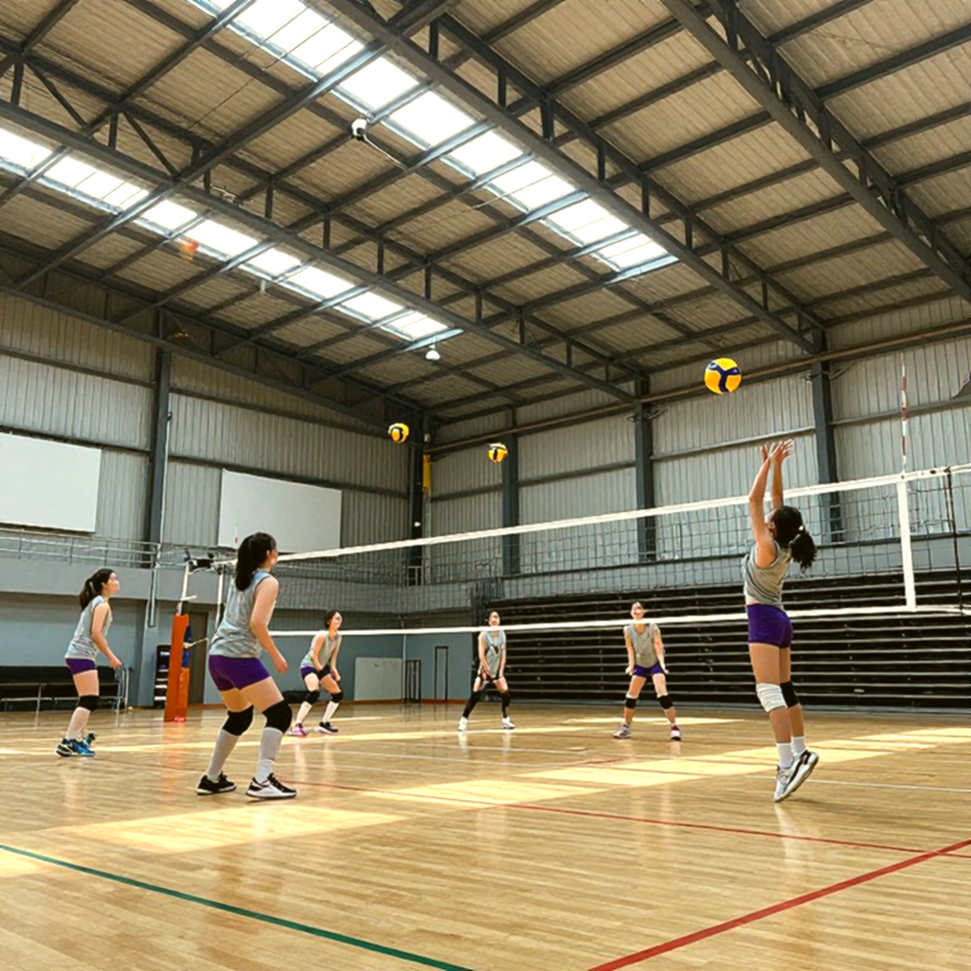
But my real focus is not only on stars. It is on the substitutes — the ones who come off the bench and shift the energy in the second or third set. In regional tournaments, matches are often decided by deeper benches. Brazil is known for producing versatile players who can play multiple positions. Argentina develops players adaptable to different tactical systems. Colombia is building a generation of young players capable of changing a match with a single serve or a single dig.
The interesting part is that continental championships often expose the names of players international media has not yet mentioned. Those players, later, are the ones who appear in Los Angeles wearing their national team jerseys.
The pulse of two magnetic colors: Desire and space
World volleyball is operating under a rule very similar to the one I have observed analyzing tactical systems over two decades: Olympic cycles are shrinking, but their pulse remains constant. Every national team runs the same lap of time; the difference lies in how each team uses the space between the pulses. Teams that use that space to experiment, to rest, to add personnel, and to fix flaws — those teams will have a significant edge upon entering Los Angeles.
I have often realized that rankings never say what they hide. Statistics reflect past results, but the silences behind the numbers reveal the actual tactical intentions of each team. Watch how teams manage their squads in Rio; that speaks more about their plans for the 2027 World Cup and the Los Angeles Olympics than any pre-match interview.
As an analyst who has spent years covering women's volleyball, I believe Rio 2027 is a rare opportunity for South American teams to rediscover themselves. Not just a tournament — but a mirror of long-term strategy through to the Olympics. Whoever dares to experiment now will carry tactical confidence into Los Angeles. Whoever tries to protect their status now may regret it three years later.
South America may bet on the champion, but history will remember only those who dare to build from the spaces.
Toward Los Angeles and beyond
When Brazil steps onto the stage to greet the home crowd in Rio, many will see a nation holding every necessary advantage to continue dominating South America. Argentina will prove that system and discipline can close ranking gaps. Colombia will make people mention their name, even without lifting a trophy, because ambition can sometimes be measured by how fiercely a team competes.
But when I look beyond Rio — past the 2027 World Cup — I see a bigger playground. Los Angeles 2028 will celebrate teams that understand that victory does not live in friendlies or regional titles. Victory lies in building a winning machine that survives every challenge, across every tournament, and endures over time.
People call Brazil's success at continental tournaments the instinct of champions. I call it a space that was prepared years in advance. And the question for Argentina, Colombia, and the rest of South America is simple: Will they dare to fill that space before Los Angeles calls their name?